TRANSMEDIA PRACTICE - FURTHER READING
____________________________________________________________________________________________
FURTHER READING 1
Story World building
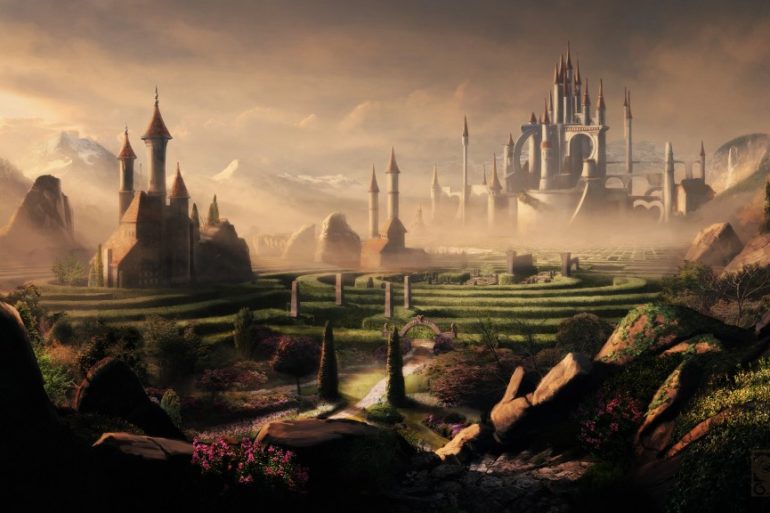
The Inside-Out Method
worked them out, you then craft the remaining elements of your world, paying special attention to how
the key functions you've outlined affect each one.
of those people's time-bending powers. Then consider how their powers affect their cultures, religions,
government and technologies, and so on.
The Outside-In Method
With the Outside-In technique, you begin by crafting a general understanding of your world
geography and boundaries. Then create specific details for your world. Boundaries become territories, become countries,
become governments and cultures and so on...
In most cases, authors who use this technique first create their worlds in-depth. Only when their worlds are relatively complete,
they begin to craft characters and stories to tell within those worlds.
Key Elements of a Successful Story-world
1. Geography
Locations
Consider the general layout of your world. Create continents and countries or planets and solar systems. Keep in mind
that most borders aren't uniform. Your world's territories will likely vary in size and shape.
Water
There wouldn't be life without water. Identify sources of water in your story-world: oceans, rivers, springs, lakes, bogs,
and so on.
Landscapes
sketch out natural landmarks, such as mountains, valleys, deserts, forests, plains, hills, and wastelands.
Climate
Weather affects many aspects of daily life. Think about how seasons will work in your world. Which places remain hot
or cold year-round and which places get a taste of all four seasons?
Consider how the weather affects the growth of plant life, which in turn affects where and how animals live in their
environment, humans included.
2. Cultures
Power
Most cultures have systemic power structures, in which people of a specific gender, religion, sexuality, and/or race hold
power over other people groups. Consider the power structures within your own cultures
Government
The group that holds systemic power within a culture likely also controls its government. What laws rule the land? Who
creates those laws? How are laws enforced, and what rights do the people within each culture hold?
Religion
Religion has a large effect on the culture's laws and social norms. When creating a religion, consider the deity(s) being
worshipped, how worship is performed, and what the religion preaches about good, evil, and the afterlife.
Art/Entertainment
What sports, races, fights, and games are played by the people in your culture? Are there professional actors, comedians,
musicians, or magicians? How do these people live and who pays to see them perform?
Relations
Cultures frequently clash, and so conflict ensues. After developing your world's cultures, consider what each culture thinks
of the others. Which laws and norms in one culture are reviled by another? Which are envied?
3. Social Classes
Divisions
identify the boundaries of each social class within your culture. Are the classes defined by wealth? If magic exists in your
world, consider who controls it and how that might affect the way people.
Food and Drinks
Consider the types of foods each of your social class's can access, and how that affects their health and lifestyle.
Professions
The professions that are available to each class in your world. Consider what fields of work must be fulfilled in order
for your story-world to run smoothly. Which people fulfill each role?
Appearances
Use in clothing and adornment. What can each social class afford? What are the popular styles within each class?
Skin tone, build, coloring, hairstyle and other physical defining features.
4. Magic
Who receives magic in my world?
How do these powers manifest themselves?
Is magic wild or can it be controlled?
Can magic be learned or are people simply born with it?
Where does magic come from?
Are items such as wands or staffs needed to use magic?
Is magic practiced or shunned by religious leaders?
Do any of the social classes fear or ban magic?
Is there good and evil magic?
Can magic be defeated or destroyed?
5. Technology
What technologies do people use to communicate?
What technologies do people use to travel?
What powers technology?
What technologies have been developed solely for entertainment?
What technologies have been developed to fulfill people's everyday needs?
What is weapons technology like?
Who created these technologies?
Who can afford these technologies?
How does technology affect education?
What technologies does the government utilize to control the population?
References
https://www.well-storied.com/blog/an-introduction-to-world-building?format=amp
https://medium.com/@daedalushowell/transmedia-worldbuilding-and-weird-german-words-e076240cd0d
https://www.wired.com/2012/10/technology-and-storytelling-1/amp
____________________________________________________________________________________________
FURTHER READING 2
Audience Engagement
Audience Engagement
structure their distribution in space and time (Walker, 2004; Kinder 1991)
to bring the audience closer to the story world.
the most challenging and most rewarding element is interactivity.
Integration
- According to Jenkins (2006), each branch of the story should be independent enough that an individual enjoy each one
- Dena (as cited in Long, 2007) disagrees with Jenkin, she prefers the term “transfiction”, which refers to a story that is
The video diaries are the main story source, or primary text, and alone tell a complete story. Without the videos, it would
Having some or all platforms tell an independent story
increases accessibility
creates more widespread engagement
building an interconnected storyscape
creates a narrative experience
Distribution in Time and Space
the opportunity for audience to follow along the story in real time.
experienced “live” matches it’s narrative time with the audience members’ real time (Walker, 2004).
reflects our Internet habits of scanning, rather than reading, and rapidly switching from task to task.
a boost in accessibility, but it is what makes such precise timing and spacing of a narrative possible.
Interactivity
Page (2014) finds in example, The Lizzie Bennet Diaries
audience engagement did not impact the plot of the narrative.
However, the audience still found meaningful ways to interact with the story; for example, fans were able to have
Narrative Verisimilitude
creates a stronger emotional reaction in an audience
combination of the techniques previously discussed including integration, interactivity, and distribution in space and time.
projects that utilize social media to create profiles for the characters
place these characters’ online presence in the same space as the presence of real people
characters are assimilated into a stream of social media updates, and interact with their audience the same way the
small interactions, like creating a video response or tweeting a character, create the sense that the characters are real
Conclusion
the use of multiple platforms allows the story room to expand and develop
creating a more immersive experience for the audience
the focus is largely on the construction of the narratives and how this impacts the experience of the audience
future studies could also explore the impact of particular media platforms on an audience’s level of engagement
the transmedia structure is well suited to the current age of the Internet and media convergence, and transmedia stories
References
https://neptunemade.neocities.org/library/essays/transmediaessay.html
EXAMPLE
The Lizzie Bennet Diaries
The New, Old Way to Tell Stories: With Input From the Audience
To let viewers participate in their stories via Twitter and Facebook
A YouTube show that uses a video diary to retell a contemporary version of Pride and Prejudice. The series shows the “real”
video diary of Lizzie Bennet, a 24-year-old grad student studying mass communication, living at home with her parents and
sisters, and completely caught up in the social media world.
At just three to five minutes long, each vlog teases you into the next, and the next, and the next. Then, once you’ve scarfed
down half the episodes and discover all the other delights that accompany the show—the Twitter feeds, the Facebook pages,
the fan art, the Instagrams and Tumblrs—it’s a full-blown binge.
When younger sister Lydia elopes (whoops—in keeping with the times, substitute “unwittingly makes a sex tape” for “elopes”)
with Lizzie’s former flame, Wickham, you can trot over to Twitter to witness Lydia’s desperate pleas to Wickham and then
tweet her your sympathy. You can post questions to Lizzie in the comments, and have her address them in a later episode.
If you make a cool Tumblr for the show, you just might get it tweeted by the official LBD account. The show’s producer,
Alexandra Edwards, explainedin a recent interview that even though the videos are filmed well in advance, contributions from
the fan base are part of the creative process:
The multiple platforms allow fan interaction to add zigzags and layers to the old linear story, and it’s a shining example of
what’s become known in entertainment, tech, and advertising as transmedia. Rather, at the heart of transmedia storytelling
is the interactive “storyworld,” which, like The Lizzie Bennet Diaries, blurs the lines between fiction and non-fiction, creator
and audience, narrative and non-narrative.
References
https://digitalcommons.butler.edu/cgi/viewcontent.cgi?article=1495&context=ugtheses
https://www.youtube.com/channel/UCXfbQAimgtbk4RAUHtIAUww
Comments
Post a Comment